
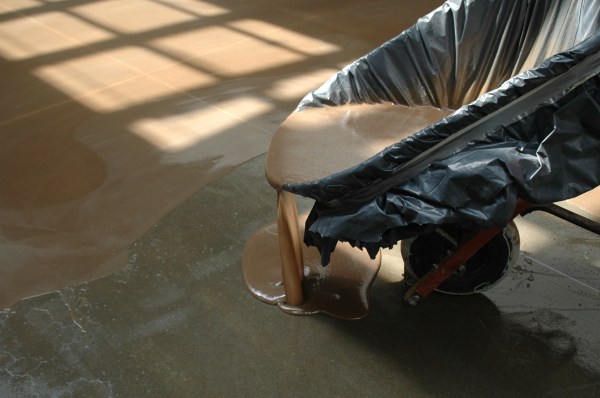
Explaining myself to an architect recently, I discovered that I was talking in circles and still not communicating the differences between epoxy floors and urethane floors. I realized that getting through the matrix of possibilities without a guide can be overwhelming for someone who is not surrounded by all of the products on a daily basis. Like many other products on the market today, resinous flooring products are diverse, different and confusing to select. A once simple product has evolved into an endless combination of products that keep the most informed professionals on their toes.
In My Life and Work by Henry Ford in collaboration with Samuel Crowther. 1922., Henry Ford said, ‘Any customer can have a car painted any colour that he wants so long as it is black.’ As we all know, you can buy a Ford in almost every color today. Like Ford, the material manufactures saw the opportunity for customization and thought it would increase their market share in the flooring industry. This change has been beneficial for the industry, but added an extra layer of confusion for the customer. While simplicity makes decision making easier, products need to be designed to maximize lifespan and performance based on their anticipated environments. For the sake of this discussion, an oversimplification of product lines will help in understanding the basics of resinous flooring.
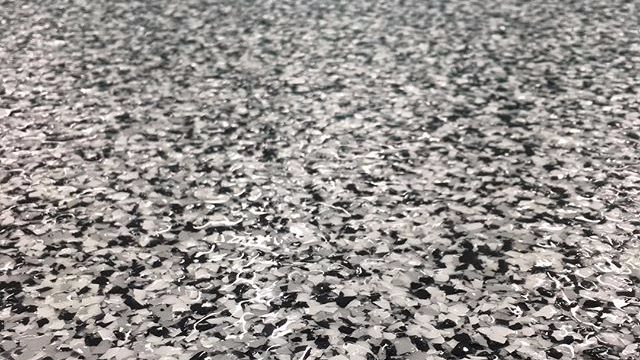
To get started, I will focus on the major types of resinous flooring. I am going to describe four types of resins that will meet our exceed most project needs. There are many more types and sub-types of resins, but for simplification I will use the four most used resin types in this article. The most common used and recognized resin is epoxy, then urethane and then the less known polyaspartic and methyl methacrylate (MMA). Without exception, each of these products can be filled with identical decorative aggregates for a similar finished product.
EPOXY:
Epoxy materials have been used longer and more commonly than any of the other resin types. In 1936, epoxy paint was patented in Switzerland and by the late 1950’s, they were being used in military specifications. Epoxy’s are “any of various usually thermosetting resins capable of forming tight cross-linked polymer structures characterized by toughness, strong adhesion, and low shrinkage, used especially in surface coatings and adhesives.” EPOXY – The Free Dictionary
By the late 1970’s Epoxy’s were available for flooring installations in meat packing plants and heavy industrial shops, but it was not until the late 1980’s, when decorative aggregates were introduced, that epoxy materials hit the mainstream construction industry. Epoxy Products are usually two component thermosetting products that can, but often do not, contain solvents. It is simply a two part clear glue that cures to create a hard plastic like finish.
- Pro’s:
- Easy to obtain
- Easy to work with (many different types available)
- Very hard finish (often up to 11,000 PSI)
- Easy to pigment and use with decorative additives
- Smooth or textured
- Available with low odor (when 100% solid)
- High build (can be used as grout or mortar)
- Con’s:
- Not UV stable (amber color with UV exposure – including florescent lighting)
- Scratch-able by sharp objects. (abrasion resistance lower than urethane)
- Not resistant to high temparatures
- not moisture tolerant in most cases.
Urethane:
Urethane is a slightly more diverse resin that contains materials derived from petroleum or plant resins. This material ranges from thin high performance coatings, to heavy cement filled overlays. Most urethane’s entered the market as a solution to two major problems with epoxies. Urethane is both harder and more UV stable than epoxy in most cases. Many flooring systems that required a high build coat and an abrasion resistant finish use epoxy as the base coat and urethane as the final ware coat. Due to the superior adhesion qualities of Epoxy, the combination of these two materials expand where resinous flooring can be used. To simplify the understanding of Urethane, splitting it up into tow categories helps.
- Urethane Coatings: Coatings have been around for a long time and have been utilized in conjunction with epoxy primers to create a long lasting, light stable, hard shell finishes for protecting concrete floors and walls. This process usually involves mechanically abrading the surface and applying multiple coats to achieve a thin mil system that is both cost effective and attractive. These products have been used on metal for ships and tank linings as well.
- Urethane Cements: The use of Urethane cements is more recent in the timeline of resinous flooring. This material utilizes resins that create water as a byproduct during the curing process; the water is then utilized by a cement component to create a concrete like finished product that is mixed in with aggregates based on the desired thickness and performance requirements of each system. This product has become popular due to its ability to resist hydro-static pressure, handle high heat and wet environments, and its speed of installation. It has replaced epoxy in food production and commercial kitchen environments.
While there are many other uses for urethane’s, the two above are the most common in the flooring industry. One more other common use for urethane’s that cross over into the flooring industry would be in flexible track systems and permeable overlays. Most of these systems use moisture cured urethane’s to achieve a flexible system in combination with rubber or gravel to produce an attractive usable surface that is much more resilient than concrete. It is important to note that most urethane systems utilized on floors and walls are in combination with epoxy to utilize there maximum benefit. Urethanes are also commonly used for waterproofing parking decks and mechanical rooms.
Methyl Methacrylate (MMA):
I am not gong to spend much time on MMA’s because their use is more limited but easily explained. This is a product that has some very good qualities and some that are less than desirable. It is very hard to find a more chemical resistant product that sets up as fast as MMA and is light stable. These products are often used where speed, temperature and chemical attack are of high importance. These products can set up in very cold conditions and stand up under the suns rays with little to no discoloration over time. One of the problems with this resin is the overwhelming oder that comes with the curing process, and the rapid installation rate takes a trained installer to achieve a good finished product. While the product performs well in many environments, its installation requirements limits its use in many areas. Even though the odor contains acceptable rates of VOC’s (volatile organic compounds), it can still get into food products and cause negative effects on people exposed to the fumes.
PolyAspartics:
For the scientists and enthusiasts:
Polyaspartics have evolved as the a perfect blend between polyurethane’s and mma’s; they have the high gloss of polyurethanes and the fast setting light stable qualities of mma’s. Polyaspartics are very chemical resistant and remain slightly flexible while achieving a hard protective shell. While mma’s will only bond well to themselves, Polyaspartics can be used with epoxy systems like polyurethanes to create successful hybrid systems for varying environments. These products are very durable and very clear; they work well with decorative quartz and Flake.
Moral:
Like always, I like to finish with a “moral”. It is important to know the difference between many of the materials on the market. Even though I have highlighted a few, there are many more that can be utilized for each individual projects. It is important to get advise from a knowledgeable trustworthy professional to plan the best product for each project. If you have questions or need advice please contact resin adviser for your next project.








 Moral: I always try to end with a positive note or message, this one is easy: Work very hard and relax completely to recharge. Never let your teem or yourself get so berried that you cannot see a way out. Part of the fun in what we do everyday is finding creative ways to solve problems. If you take the time to relax your mind and take in some beautiful scenery now and then, you will find that you can solve any complex problem one piece at a time.



 Residential Construction has very specific challenges tied directly to a homeowner’s opinion and satisfaction; while lien laws can serve as protection for contractors, they do not speed up the rate of payment if there are conflicts. Most subcontractors that do good work will get paid either weekly or bi-monthly to keep cash flow moving, and while this is a much better rate than the average commercial contractor, money is held from one project to entice contractors to the next project. There is very little regulation protecting subcontractors from general contractors. Payment can also be tied to customer satisfaction; if a homeowner doesn’t like the work, no matter how good or complete it is, the payment is often held for long periods of time. In many ways, residential constitution is like the wild west of construction. It is very hard to get predictable and fast paying customers because of how volatile the housing market is. One wrong move and a Home Builder can get stuck with unmovable inventory and no money to pay subcontractors. If a good relationship is formed between the contractor and the subcontractor, residential construction has the potential to pay much faster than commercial projects, however the rates for work are often lower.
 Commercial Contractors have a whole different set of problems to deal with. Most of my experience is with commercial construction (not all), so I have a more comprehensive description of the problems that plague commercial contractors, especially subcontractors. To understand the billing and payment challenge I need to go through the billing – payment process for most contracts. When a job is complete, a subcontractor is required to bill a project on a specific date (usually on the 15th, 20th, or 25th). A contractor can bill through the end of the month (projected) but if the estimate is not accurate, the entire pay application can be denied and the billing can be pushed to the next month. Once a pay application is received (and let’s assume that all the “i’s” are dotted and the “t’s” are crossed), then the General Contractor turns in their pay applications to the owner. When the owner pays, and that is usually 60 days, the General Contractor has 10 days to pay the subcontractor. If you do the math on this time table, most subcontractors can expect to get paid anywhere from 45-90 days from the beginning of their work on a project. Retainage is the money that is held until the job is 100% complete by all contractors involved; this is money that can take up to a year to collect on most jobs and it is usually between 5% and 10% of the total contract. In many cases, the retainage makes up a subcontractor’s profit.
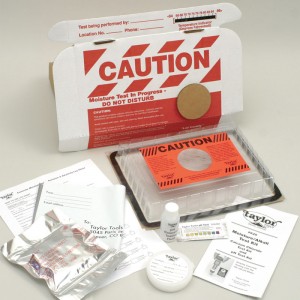 This is a common sense guide to get the basic understanding of vapor transmission. This, short, to the point, article is to open the door of understanding about an issue that not only plagues resinous flooring but any sheet-good or barrier type flooring installed over concrete. To grasp a general understanding about this problem, you have to travel back in time (at least in the resinous flooring industry). This “problem” is a relatively new one to the industry and did not become a “common” problem until about 10 – 15 years ago. While I am sure there is science to explain why this problem did not become better known, my opinion is two-fold. First, the advances in admixtures for concrete that allowed for placement quickly and easier with less cracking, also affected the internal makeup of the concrete matrix, creating capillaries where moisture can either get trapped, or transfer through the slab more easily. The second, is the regulations on resin manufactures by the EPA; the reduction of solvents does not allow for the products to penetrate as deep into the concrete for a proper mechanical bond. Another probable reason added on top of these two, is the increased speed of construction and the inability of a slab to properly cure before being put into service.

 Resin Adviser