

It is an unfortunate fact that construction contractors, especially subcontractors do not get paid in a way that is conducive for the growth of their businesses. Both residential and commercial contractors have unique challenges that most other types of businesses don’t have to deal with. Contractors have many complex issues that they must worry with like, customer satisfaction, vendor payments, personnel issues, and rent to name a few. The complexity of problems that arise on the simplest of projects is impossible to imagine unless you have experienced them first hand. With the complexity of problems they face, getting paid is the most important, and often the most difficult.
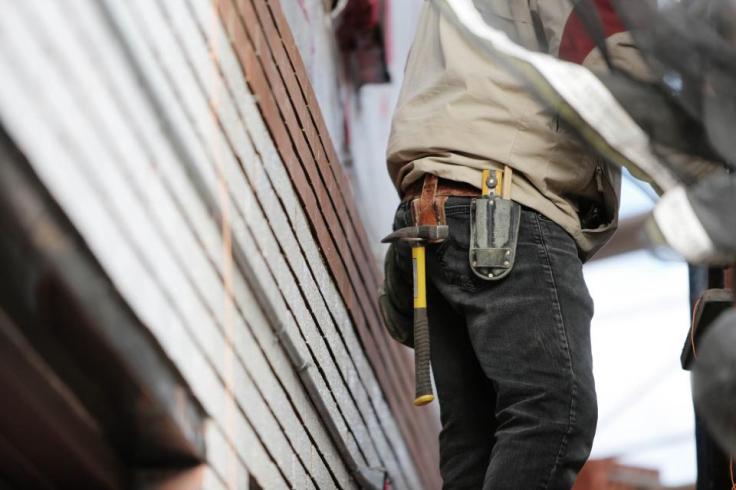 Residential Construction has very specific challenges tied directly to a homeowner’s opinion and satisfaction; while lien laws can serve as protection for contractors, they do not speed up the rate of payment if there are conflicts. Most subcontractors that do good work will get paid either weekly or bi-monthly to keep cash flow moving, and while this is a much better rate than the average commercial contractor, money is held from one project to entice contractors to the next project. There is very little regulation protecting subcontractors from general contractors. Payment can also be tied to customer satisfaction; if a homeowner doesn’t like the work, no matter how good or complete it is, the payment is often held for long periods of time. In many ways, residential constitution is like the wild west of construction. It is very hard to get predictable and fast paying customers because of how volatile the housing market is. One wrong move and a Home Builder can get stuck with unmovable inventory and no money to pay subcontractors. If a good relationship is formed between the contractor and the subcontractor, residential construction has the potential to pay much faster than commercial projects, however the rates for work are often lower.
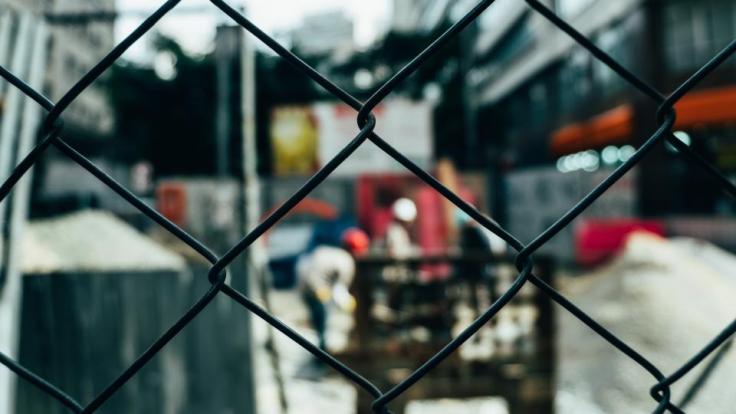 Commercial Contractors have a whole different set of problems to deal with. Most of my experience is with commercial construction (not all), so I have a more comprehensive description of the problems that plague commercial contractors, especially subcontractors. To understand the billing and payment challenge I need to go through the billing – payment process for most contracts. When a job is complete, a subcontractor is required to bill a project on a specific date (usually on the 15th, 20th, or 25th). A contractor can bill through the end of the month (projected) but if the estimate is not accurate, the entire pay application can be denied and the billing can be pushed to the next month. Once a pay application is received (and let’s assume that all the “i’s” are dotted and the “t’s” are crossed), then the General Contractor turns in their pay applications to the owner. When the owner pays, and that is usually 60 days, the General Contractor has 10 days to pay the subcontractor. If you do the math on this time table, most subcontractors can expect to get paid anywhere from 45-90 days from the beginning of their work on a project. Retainage is the money that is held until the job is 100% complete by all contractors involved; this is money that can take up to a year to collect on most jobs and it is usually between 5% and 10% of the total contract. In many cases, the retainage makes up a subcontractor’s profit.
Most of us make a paycheck weekly or biweekly; as you can see, this is not the case for most contractors. They must find a way to function 90 days ahead of their money. Payroll is commonly weekly and suppliers hold firm at 30-day payment terms in most cases. Larger subcontractors find themselves heavy on receivables with suppliers breathing down their necks for payment, while smaller subcontractors struggle to meet payroll pressure weekly as they wait to get paid. It is common for profits to be held up for up to a year on some projects.
The Question: Is this problem fixable? Is there a way to promote good work and speed up funding for responsible contractors and still protect owners from the pitfalls of poor workmanship and warranty issues?
There is no short answer to the question, but the prospect of success is not impossible. When good partnerships form between Contractors and Subcontractors much of the red tape can be avoided. Major contracts have hurdles that still must be leaped, but a good working relationship can keep costly mistakes from holding payments up in both residential and commercial construction. With a relationship based on trust and experience, good contractors make construction finance problems almost bearable, but to build a quality company in the current environment, a contractor must be patient and responsible. In short, relationships rule the day and partnering with the right contractor and subcontractor can make a huge difference even when their bids may not be the lowest.
Moral: No matter what business you are in, don’t think that contractors have it made; it takes hard work, patients and a little luck to be successful in Residential or Commercial construction. We are a rough around the edges, rag-tag group of hard working people trying to navigate our trade. All contractors are not created equal and low bidders are not always the lest expensive way to go. If you are a contractor, look for good relationships and do quality work for a reasonable price; if you are a customer, do your homework and don’t always choose the low bidder.
 Resin Adviser