
A Family Affair -The Challenge of Conducting a Family Business.

A Family Affair:

The operational challenges facing every type of family business can be rewarding and crippling at the same time; facing the normal demands of running a business with the added dynamic of family pressures often tests the best entrepreneur to the limit.  This complication often makes for extra stresses that can either sink a successful venture or bond it together and make it invincible.  While the challenges far outweigh the normal stresses of work, having multiple members of a team that treat a business as their own can lead to unequaled dedication and work ethic.

The Bad:

Most family businesses pass from generation to generation, however there are many different forms of family operations that do not follow the usual model.  Some companies are started by the younger generation and joined later by the older generation or siblings and other family members.  While there are challenges facing every type of family business, the chain of command that evolves when roles are reversed can add to the already stressed environment.   Navigating role reversals in a business environment can be like navigating the Titanic around ice burgs; the roles must be constantly confirmed and adjusted to find a successful path that is both effective and acceptable for every individual involved.  Failing to define roles can lead to conflicting decisions that cause confusion for both employees and customers.  The solution, painfully difficult, is to have the roles clearly defined in the Articles of Incorporation and make sure that the roles correspond with company ownership and abilities.  While this is one of the more difficult things to do on a personal level, it will save years of pole positioning that will undoubtedly cost time and personal relationships that cannot be recouped.

Financing a family business can be an extra added challenge that has the ability to test the patience of the most stable families.  While setting out to open a new venture, guidelines must be set, there are countless numbers of situations that can require additional funding that all of the parties involved my not have access to.  The handling of financial situations must be clear cut, and set forth prior to any additional funding, and a payment schedule must be agreed upon with documented guarantees to make sure that all of the parties involved understand the intent and payback plan.  No mater the relationship, finances have the ability to drive a wedge in operations when the lines get blurred between business and personal relationships.
Fam Bus2

The Good:

A family operation can be stronger than any individual company for many reasons; experience, teamwork, and diversity can make a companies leadership more successful to a larger customer base.  For many family operated companies, past generations have contacts and experience that the whole company can benefit from; utilizing skill-sets and contacts can lead to rapid growth of a new company.    If the older generation desires a less rigorous schedule and lower stress, then having multiple generations involved can join experience and energy into a cohesive momentum that can boost overall confidence and momentum for both the employees and customers alike, letting all of the partners participate at their desired rate.

Pooling expertise and money can lead to a more rapid growth and overall success rate that far surpasses the abilities of a single owner start up.  The key is to avoid the financial and emotional hurdles and race towards the end goal together with a clear plan and teamwork.  While this kind of operation is not for everyone, when it is successful, it can lead to a healthy work and personal life.  Another key benefit to family operations is a clear line of succession that adds stability for both employees and customers, allowing a business to obtain better hires and larger contracts.

The combination of instant business with injected energy is a recipe for success as long as the internal communications withing the business is done well and often.  Communication is the single largest key to the internal success of a family business, with the power to propel success or take a company down quickly.  Below are a list of questions that can either guide you to make the jump into a family business, or help get one back on track.  In my experience, everything is playable but must have a stable foundation; a team must be wiling to make changes that lead to success quickly, but must stick to the foundation set at the conception of the partnership.

Questions:

  • Have you ever been in business with a family member before, or do you know anybody that has?  Get some advice from someone with experience.
  • Do you have the financial means to operate a business if one or more of your family members (partners) want out?  would they be willing to help even if they were not involved?
  • Are you prepared to give personal guarantees (financial) to your family members (partners)?
  • Are your family members (partners )financially stable; are you?  Will you have to front most of the capital?
  • Are you willing to put in sweat equity to off set any other members financial contribution?
  • Do you operate well in a team setting, or are you more of a lone wolf?  This can be structured into a business with multiple people as long as all parties are aware of the “decision making process”.
  • do you and/or your partners have experience in your industry? Is the experience equal?
  • Is this venture being considered due to current financial/personal strain? check your motives.
  • are you and your family members (partners) willing to put in the long hours required to successfully run a start up?
  • Are you willing to fail? Is there a backup plan?

Hopefully this short article will help with providing some important questions and lessons gained from experience.  Please feel free to add any input or questions in the comment section, and go out there and be successful at what you do.  Plan hard, work harder, and have fun along the way.  A well structured family business can be very satisfying and allow for flexibility unequaled in any other business type.


success


Planning The Perfect Project – A Work in Progress

“A goal without a plan is just a wish.” ― Antoine de Saint-Exupéry, writer and pioneering aviator

If you are like the majority of business owners and project managers working in construction, you might put projects together conceptually on bid day, but not take the detailed effort to plan them after contracts are received.  Planning can easily be the largest post bid factor to higher profits in the lifespan of a project.  For most estimators, the bid process is a scientific process of multiple hypothesis based on a set of lines and specifications mixed with past experiences.  In the wold of estimating, everything is in theory and based on past projects, but nothing is “concrete”.   In most cases, a project starts as an invitation and then moves to drawn details and plans that amount to lines on paper or a computer screen.  Taking plans and putting them into reality is a delicate process of infinite variables that nobody has complete control of; this fact is what leads many good leaders to abandon detailed plans and rely on instinct and quick reactions to drive a project.  This very same instinct can lead down a trail of costly mistakes and avoidable rework if it is not executed correctly.

While bidding is taking your best guess based on past experience, and putting a realistic number to a plan, project planning is much more involved.  This process is commonly overlooked because the daily inertia of other ongoing projects keeps focus on the NOW and not the FUTURE.  One of the most difficult transitions for a contractor is moving from bid to reality; it is hard to take the plans from an estimators desk (and mind) and transport them into the actions of field installers.  Even when managers stay on task and work with installers on a daily basis, projects can still suffer from poor plan execution if the plan is not put into place before the project begins.

A Good Resource for Project Planning

Sometimes preaching to the choir is my calling; As a manager and owner, I have suffered the shortcomings of poor planing, more times than not.  It takes one well planned and executed project to highlight all of the shortcomings that exist in other projects, and one very poorly planed project to send the team racing back to the dry erase board to fix upcoming projects.  Through my experience, below is a few steps that can guide a team through the process; it is a simple guide that needs to be fine tuned per project and scope, but can serve as a starting point for a successful project.

  • 1.  Start with the Bid Process but do not waste valuable time:
    • Look at every relevant specification and detail to your scope of work (don’t assume you know what the customer wants)
    • Start early enough to ask questions – Make sure you get the answers.
    • If in doubt – clarify your scope on your estimate.
    • Pull from past experience and make adjustments (know your limitations and price them into the project – whatever can go wrong, probably will times 2)
  • 2.  Save your work and notes (not documenting today will leave you scrambling tomorrow)
    • Keep all handwritten notes and scan them to a data file.
    • Keep any photographs of the site in a data file.
    • Keep any important detailed drawings/plans and save them to a data file.
  • 3.  Look over the Contract (if you are lucky enough to be the winning bidder)
    • Is there a reason you were the low bidder?  Qualify your bid before executing contracts)
    • Check you raw material prices – suppliers may have raised prices after you bid the project.
    • Check your work – make sure your bid was based on the most recent plans and addendum’s.   Don’t get caught giving free work for something you can clarify before entering into a contract.
    • Deal with reputable Contractors – let experience guide you into contracts with people that you can trust.
  • 4.  Schedule:
    • Place the project on a schedule as soon as you can (it can be moved)
    • Be flexible but firm – Schedule 25% extra time for a job and make sure you have the manpower to accomplish the published schedule.  Under promise on your schedule and Over deliver.
  • 5.  PLAN:
    • Meet with your teem at the time of contracting and set up a time to go over details before project begins.
    • Don’t waste time – Planning to early is nearly as bad as not planning if either the wrong people are in the meeting, or to much time goes by before the project – “timing is everything”.
    • Set out some goals for ordering materials, special tools and select preferred applicators for a project.
    • Have everything you need available before a project begins (keep in mind that you will never really have EVERYTHING)
    • Agree with your team, that the plan is a living thing – be open to its evolution.
  • 6.  Execution:
    • Always schedule a pre-construction meeting or site visit at least week before begging a project.
    • Share your plan with the project superintendent and project manager before beginning – put in in writing.
    • Start by assuming that the plan is a good one and get to work
    • Be prepared to modify your plan – the better the plan the less you will have to change; changes to your plan, if done correctly, should result in a change order.
  • 7.  Finish Strong:
    • Pre-punch all of your work and have any site supervisor inspect it before you leave – re-mobilizing is costly.
    • Many projects hold retainage until projects reach substantial completion; secure your final payment by getting any punch list items signed off on.
    • Do your paperwork – Bill the project and turn in all paperwork so that there are no hurdles holding up your final payment.

While the seven items above all appear to be common sense, my team misses many of them on every project due to project blur (the process of overlapping projects that keep a person from giving 100% attention to one thing at a time).  It is important to let a team process one project at a time, and move onto the next project once finished.  In our industry, it is nearly impossible to dedicate time to one project at a time; a team must set limits on meetings and close out one subject before beginning the next.  Try to plan ahead so that when a project is in front of you, there are no time consuming details keeping you from focusing your attention on the next bid.  Like almost everything in life, the process is cyclical and must be kept up with at all times; looking back just slows you down.

“Every minute you spend in planning saves 10 minutes in execution; this gives you a 1,000 percent return on energy!” ― Brian Tracy, author and motivational speaker

Planning2

What a Difference the Topcoat Makes.

It is hard to figure out exactly what is the best product to use for each project when there are so many options available.  While the finished products may look similar and the aggregates used can make the initial colors and textures identical; the materials used in the system are very different.  For a designer or architect, it is important to choose the best product for the customers use and the environment.  When resinous flooring first came to the United States, there were few choices, but today there are many choices to provide the best produce for each and every project.  I will try to simplify the process and help clarify the selection process.

First, it is important to understand the major material options.  There are four major options for use in most projects, and they are available from most of the more mainstream manufacturers.  Epoxy, Polyurethane, Polyaspartic, and MMA are all used as topcoats and  complete systems in many resinous flooring projects.  All of these products are transparent resins that are made up of multiple components and cure to a clear finish.  All of these products except for MMA will look very similar directly after installation unless additives are added for texture.  The danger of not understanding these products is that most people cannot tell the difference between them until the floors go into service, and by then, it is too late.

web banner formulation guidelines scientist lab

Chemists have spent years developing resins that will work well in different environments.  While epoxies of the last century worked well, there were weaknesses that needed to be resolved.  Below, I will try to outline the best qualities of each type of material.  It is important to understand that the application of each product has an impact on the finished product and some of the products listed are more difficult to install than others.

Epoxy is the grandfather of the others in the resinous flooring industry.  It is strong, easy to use and still very relevant.  Epoxy has been used for flooring for many years and is still used on many projects.  While many systems are entirely made up of Epoxy, they are also used as primers and base coats for other types of systems.  Epoxy’s bond well to concrete and to themselves; they work well with sand and aggregates and rarely cause problems with out-gassing or fish-eyes.  Think of Epoxy as a great building block or foundation to many other flooring systems.  While epoxy has great qualities, it also has weaknesses.  Epoxy turns amber over time, and even though scientists have improved its light stability, it is still not as light stable as its newer cousins.   Epoxy is also not very resistant to heat; it is however chemical resistant, especially in its Novalac form, but much less light stable.

PolyUrethane is the next step up in Resins; it is very clear and light stable.  Urethane’s first gained popularity in the flooring industry as topcoats on epoxy systems in airplane hangers and automobile dealerships.  First generations urethane’s contained solvents and would not meet today’s VOC requirements, but there are many low and no VOC options available today.  While urethane’s solve many problems that plagued epoxies, they still do not bond well to concrete or each other.   Urethane’s are very chemical resistant and more tolerant to higher temperatures, but do not work well as a stand alone system.  Urethane’s are best used as topcoats over epoxy systems where high traffic, light stability, gloss, and temperature are issues.

Polyaspartic is similar to urethane, but much faster.  Many Polyaspartic products have little to no odor and cure very quickly.  While the rapid cure can be a positive, it can also be an extra challenge to installers who are not familiar with working quickly.  These products, like polyurethanes, do not bond as well as epoxy to concrete and do not bond well to each other without extensive preparation.  Polyaspartic systems can work well, but must be installed quickly and within redcoat windows to make sure each coat bonds to the other.  These products are very light stable and remain clear compared to their epoxy counterparts.

MMA cannot be ignored as a relevant option in the resinous flooring industry.  This product is probably the best resinous product for exterior work.  MMA bonds well to itself and is very light stable.  Unlike its cousins, it is not glossy.  MMA products cure quicker than any of the other resins and can be a challenge for installers.  These resins can be very tricky to work with and have a strong odor that cannot be used in many occupied facilities.  While MMA’s are popular due to their speed and chemical resistance, the hurdles in their installation limits the availability of quality installers.  MMA cannot be used as a topcoat on another system unless it proceeds a total broadcast or completely cured product; it can literally melt other resins.

When you have a project, it is best to consult with a professional to come up with the best system that will work for your environment.  The first step is having an understanding about the products, and realize that they all have their strengths and weaknesses.  Finding the right combination, can lead to a successful project.  For the best results, it is important to have the best product specified so that the installers (bidders) are clear about the expectations and use a product that will give the customer the best finished product for their environment.

Is OSHA Driving Construction Costs Up?

This article is meant to spark a constructive conversation about the construction safety industry and its affect on construction costs, without ignoring the important safety concerns essential to the construction process.  Construction can be a very dangerous endeavor for many trades and the need for regulations and oversight is necessary for job site safety.  Even though OSHA is spending more money every year and making more regulations, the overall death toll on construction sites rose from 2011 to 2015.  construction-leads-industries-worker-deaths

As a whole, OSHA is a necessary governing body that needs to be in place to protect workers from unsafe practices.  They were formed in 1971, but they did not have a major presence on commercial job sites until much more recently.  With a rise in knowledge, comes a new perspective on safety and regulations.  Since its inception, OSHA has put some very important safety regulations into law and protected many people from dangerous practices. OSHA Timeline  While it is important to separate a regulating body from the business it regulates,  many of their regulations are not only costly to enforce, but very costly for contractors to comply with.  While cost should not be spared for human life, a closer look at the direct costs of each regulation needs to be explored.

Football

In Football, for example, new concussion protocol and new rules have attempted to minimize head injuries in the sport.  While high school and college players are not “employees”, their professional counterparts are.  With the new knowledge associated with head injuries, kids (and their parents) are turning to different sports with less risk involved.  Gifted kids, and those that love the sport, are still playing football in spite of the risk because of the dream of playing professional sports and the pay that comes along with that rare opportunity.  The parallel between football and construction is this; there are risks with every career, and more with some than others.  Each individual accepts those risks when they join the workforce.  It is not possible to have zero risk in any profession, and compensations are based on each jobs risk.  This is as true for construction and football as it is for business risk in white collar jobs.  The more you risk, the higher possibility for gain and/or failure.

CAution

But Why the Lunacy? 

Some very important regulations are necessary to keep workers safe, but due to the robotic efficiencies of the 21st century, common sense has been thrown out the window.    The MSDS sheets and now SDS sheets are necessary and very helpful, but do not really tell the “whole” story.  Many products that we let our kids play with at home require construction workers to wear respirators to handle.  Materials are marked with warnings that resemble cigarette cartons.  While education is the answer, there needs to be common sense used in creating warnings and regulations.  General Contractors are intimidated by OSHA and want to avoid fines, so they make small sub contractors jump through hoops that create chaos and loss in profits.  Major General Contractors have created safety positions for job sites and created an adversarial environment where cooperation should be in place.  Many safety directors are adversarial, rather than helpful creating a hamper on productivity.

EXAMPLE:

“On a job several years ago, I received a call from the “safety director”  (I will leave out GC names and job locations) stating that our crews had been ask to leave the job site because they did not have fit tests for their respirators.  I informed him that my men did not need respirators for the work they were doing and the MSDS sheets did not require them; also, they were wearing dust masks, not respirators.  He informed me (not so nicely) that my men were wearing respirators (2-strap dust masks with the N-95 stamps are considered respirators) and they could not come back without a fit test.  I asked him if I went and purchased cheep low quality dust masks could we continue?  He said, Yes.  I complained that he was telling me to put my men at greater risk with low quality equipment rather than letting them continue and he said…that’s just the way it is.  Later on the same job he made us take a ladder safety class and test even though we had no ladders and were working on the floor.”

My example is extreme, but not that unusual; it shows how regulations that don’t take common sense into consideration can put people at risk and cost time and money.  Even though many of the safety directors (even the one in the example above) try to help, they are required to meet exact written perimeters that do not allow for any interpretation.  The industry as a whole needs to continue to push safety, but in a more user friendly way.  Trade yelling for education; in place of getting kicked off a job, make crews watch relevant training videos in the job site trailer.  Creativity has been killed with the advent of rules and regulations run by people who are far away from the actual job site.  It is time to think outside the box and create a work environment that seeks to help those who want to comply.  It is much less expensive to have a 1/2 day orientation before beginning work, than it is loosing days of work from non-compliance; and less invasive to punish workers with more education rather than sending them home.

StockSnap_RG4XMMLSNU

The Money:

Safety has become a money making industry but has caused small contractors to loose profits.  Many job sites are requiring OSHA 30 trained workers on site for any size company.  Some jobs want every person to have an OSHA 10 and first aid.  While some contractors are large and need these people on staff for every job, it is a very costly endeavor for small contractors with high employee turnover and seasonal workers.  Sub contractors are pressured into low bids on competitive jobs and then required to meet standards that are designed for much larger companies.  Many companies bid projects and then discover that they will have to spend hundreds or even thousands per employee to meet tightening requirements for projects.  General Contractors and Owners do not know how costly this can be to their bottom line on each project.  The industry and its competitive nature is driving prices, but eventually the costs will make it to the overall bottom line on each and every job.

As a whole, OSHA and the new safety regulations are very needed and they serve an important purpose in commercial and industrial construction, but there needs to be a middle qualification and financial help for smaller companies who want to comply, but have found themselves in the dangerous middle ground between profitable work and compliance.  When new costly regulation are put into place, low interest loans need to be available to help companies with the costs of compliance.  In place of catching workers doing wrong and imposing high fines, why can’t OSHA use its funds for discounted education programs implemented at a reasonable rate for companies to enroll in prior to mobilizing for a job.  Why can they not develop in-house training programs for small contractors to implement and  manage themselves?  I think there are many solutions to this complicated problem that could both save taxpayer money, and protect small business profits.  If safety qualifications continue to expand at this rate, the cost of construction will continue to rise and the money that should go to the workers will be forced into compliance.  This will be one more program designed to protect the same people that it is harming.

Any thoughts?  please post them in the comments section!

What do you want to know?

Sometimes it is hard to figure out what subject is most relevant to the projects that are going on in different regions.  This is the opportunity to request a subject or question that might be relevant to any ongoing projects; an opportunity to create a dialog to better understand the processes and details surrounding either the installation or logistics surrounding the resinous business.    Please post questions in the comments section and I will do my best to respond or expound on the subject.

Most of the common job site problems today are due to a combination of expectations and scheduling conflicts.  While most people understand how the process works, they don’t understand that the conditions required for most applications are finished conditions.  The importance of permanent lights, finished trades, and conditioned space are paramount to a quality installation.  The way that I try to explain the process is to compare resinous flooring to “manufacturing” a product in place rather than taking a pre-manufactured product and installing it in place.  The most experienced superintendents still face pressures from owners and other trades that lead to premature installations on most resinous flooring projects, and cause mistakes to be made that are avoidable.

A projects schedule can negatively influence many trades on a project if not managed properly.  the most important thing is communication and understanding.  The purpose of this post is to start an open discussion among professionals to better understand the order that finish products should be scheduled during a project.  Pool planning has led to projects moving more efficiently, however it still has not solved some of the constraints of installing a finished product without permanent lights and conditioned air due to permitting an inspection issues or other unpredictable variables.

In short, what questions can be asked to start an honest open discussion to improve our industry as a whole?  Thanks for reading and please feel free to ask any relevant question relating to installation, scheduling and process.

Understanding the Construction “Payment Gap”

it is hard for many people in non-construction based businesses to understand the challenges that most subcontractors face in financing their businesses.  Where most of business is conducted on a point of sale or 30 day term basis, that is not the case for most commercial and industrial construction businesses.

images bills

Subcontractors are the companies hired by a General Contractor to complete each specialized area of work on a construction project.  While there are contracts that protect both parties in this arrangement, a subcontractor is usually responsible for providing both materials and labor to perform their scope of work and that adds an extra layer of challenges when it comes to financing a project.  Most construction projects can take months and even years to to complete while many subcontractors are only on a project for weeks or days which can lead to their profits being tied up for an extended time period.  Most contracts today required the General Contractor to hold a “retainage” until the entire project is accepted and complete.  In many cases this money is not received for a year or more after the original billing; this can mean that a subcontractors profits can be held for over a year.

I have outlined the payment process in other blog posts, but the “payment Gap” that seeks to destroy subcontractors is the most difficult obstacle to overcome.   This obstacle starts with a monthly billing period and extended payment terms based on owner approved payment applications and then progresses to retainages held and warranty periods.  As explained in some of my other blog posts, the billing and payment process is quite confusing and difficult to master, but the most difficult thing is the “gap” between the receivables on a project and the payables. ( billing -resinadviser  ) . While some suppliers will allow for extended payment terms and joint check agreements, most suppliers put their contractors on 30 day terms.  When a subcontractor bills according to contact documents, payment on projects can take 45-90 days in the best case scenarios.  This difference in receivables and payables is what I call the “Payment Gap”.

This gap is not exclusive to the subcontractor, contractor relationship; the gap exists between resin manufactures and their suppliers as well.  Many material suppliers are held hostage to raw material suppliers who change their prices based on market price and demand rather than long term contracts.  They are also plagued with shortages and inconsistencies that have to be dealt with before the product is shipped to its destination.

In Short, there are many hurdles that have to be jumped over before a resinous project can be installed, and even more before it is paid.  It is very difficult for a company to overcome the “payment gap” and achieve financial stability.  Success is measured by getting 90 days ahead of your money and staying that way even when there are inconsistencies in schedules and billed work.

Moral:  If you are a contractor, do not get over extended and always communicate your payment concerns with both your General Contractor and your Supplier.  It is better for everyone involved to be aware of the payment terms.  Always stay 90 days ahead, and watch billings to project what payments will look line down the line.  Plan ahead so that you can manage any surprises.  Ultimately, there should be more advocacy for 30 day payment terms for subcontract work (especially materials and direct labor) with protections for the owner and General Contractor; most projects are bank funded and the funds are readily available before the project begins.  By working together, this problem can be ultimately solved.


An Ounce of Prevention…

The lack of planning in the construction industry amazes me; with all of the meetings and scheduling software used, people still don’t talk to each another to solve problems before they occur.  This industry is plagued with a reactionary cycle of dealing with issues one emergency at a time.  I have done internal research and discovered that working with the same General Contractors on the same type of job is much more profitable than working with new teams on different types of projects.  I have used this information to help promote a better profit model for the future.  The problem with our industry, is that we are drawn out of our comfort zone to chase work to feed the “machine”.  It is necessary to build up a backlog, and that sometimes leads contractors into uncharted territory.  While it is not always controllable, working on jobs that are consistent and predictable can add to productivity; when consistency is not possible, planning ahead is necessary.

Don’t fall pray to the usual pitfalls!  It is easy to get stuck in the rut of business as usual during the inertia of a busy schedule; however, when you have to retool and move to a different job, you must look at it with a fresh perspective.  In our industry, one of the common issues on many of our jobs is the floor slope; as a flooring contractor, we do not bid sloping a floor into the price of a  job because it is the responsibility of the concrete contractor.  Unfortunately, the slope usually does not get checked until we arrive on the job-site.  I am amazed at how many concrete contractors are not held accountable for slopes that are clearly marked on project plans.  Flooring contractors usually get the undeserved privilege of breaking the bad news about how much it will cost to correct the problem to the General Contractor.  Why is a floor with a drain not inspected for slopes?  Because the construction industry is still operating on a reactionary production model rather than a preventative model.  This is just one example of how communication and planning can save a projects budget one solved problem at a time.

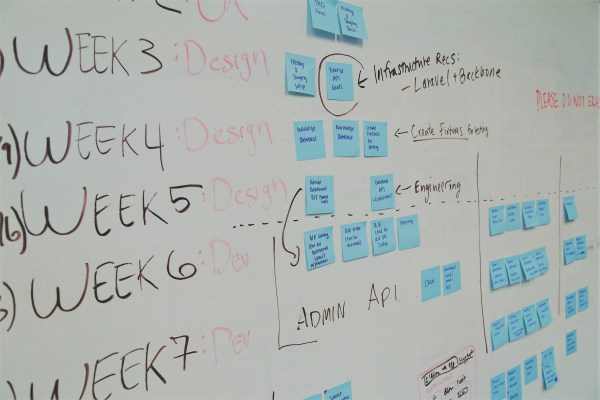
There is hope.  Many projects today are being planned with “pull planning” meetings, where subcontractors get together and work out the details of there scopes by using sticky notes on a white board.  This process sounds archaic, but the process works well and helps subcontractors react to possible conflicts before they happen.  In projects that utilize this type of communication, many pitfalls are avoided.  If the concrete contractor and the flooring contractor talk about the floor drains and slopes prior to construction, the costly slope repairs can be avoided.  Unfortunately, subcontractors are not always in control of the schedule and get trapped installing their products at the wrong time, or get their products damaged by other workers due to poor planning.  There is a solution…

Pull Planning

StockSnap_SWRREC0K3A.jpg


What Can You do?

  1. You can plan ahead, when everybody else does not:  Even thought the companies around you don’t plan ahead, you can stand out to your customers by showing up when you are expected and planning pre-construction site visits to make sure that you have all of the details covered before you begin a job – even if (especially if) they do not ask for you to visit the site prior to beginning.
  2. Keep a list – if you cannot remember it in your head:  No matter what your trade, you have some important things that need to be completed before you arrive on a job.  If you are not the type of person that can remember it all, keep a list.  Do you need permanent lights?  Do you need HVAC running?  What are your power requirements?  What does your trade require?  If you make sure the job is ready, you will save yourself money and the General Contractor wasted time.
  3. Don’t compromise:  When it comes to providing a superior service for a reasonable price, you cannot compromise on your requirements.  Many contractors find themselves in trouble when they are convinced to start a project to early, or perform work that was outside of the original scope without proper approval.  Even the best Superintendent will sometimes get their backs up against a wall and approve something that is unauthorized to get a project moving or finished on time.  Don’t fall victim to compromising on something that is going to negatively effect your finished product or bottom line.
  4. Hold your ground:  When it comes to change orders and pre-project planning, hold your ground.  You are the pro at what you do; do not let a General Contractor or another sub convince you that they know your products or service better than you do.
  5. Ask for a meeting:  This is different from #1; beyond utilizing per-construction site visits, ask to meet with other sub contractors that might have an impact on your work.  If you are not working on a job with “pull planning”, do your own planning.  Ultimately, you are responsible for your finished product.

Moral:  “an ounce of prevention is worth a pound of cure”  In the resinous flooring industry, like many other trades in construction, we are faced with enough problems internally; we do not need to let outside influences compromise our work quality.  If you give into the pressure of a rushed schedule or a poorly planned project, your final product will be compromised.  Be uncompromising and deliver consistent quality, and all of your customers will appreciate it when the project is closed out.  In the end you are only as good as your finished product.


Death of Creative Thinking?

To run a business or team of any type, you have to master the art of creative thinking.  In the flooring business like many other businesses, we are often faced with problems that are so far past the realm of obvious thinking that the usual thought processes take you nowhere.  Calculated organized thinking is necessary for daily survival, however there is a shrinking availability of people who have a truly unique thinking process.  Many of us have grown up in a drive through society of speed eating, speed dating and scheduled workouts.  Gone are the days of retreating into the backyard to a hidden world of pirates and maidens.  To navigate business problems today, you cannot relay on problem solving by the book.  You have to look outside the cover and discover a new way of thinking; a way of thinking that cannot be achieved without clearing your head and relaxing.  We are at a place in time, where “relaxing” is not relaxing.  Between rushing to a dinner date, driving kids to a soccer game and logging into Netflix, when does anybody today have a chance to relax.  The inability to declutter our brains and unplug has a direct impact on our daily lives and on our children’s creativity and problem solving.

According to an article written for Fast Company Magazine, ” U.S. creativity is dropping: the average Torrance score of U.S. children had been rising steadily until 1990. But for the past 20 years it has been in decline.” ( death-creativity-death-innovation )  There is a connection between technological advances in problem solving and the dropping of creativity in our society.   If you look at the computer history timeline published by computerhistory.org ( timeline/computers/  ), 1989 was the year that the microprocessor was released by Intel and the Palm Pilot was released in 1996.  As computers have become smarter, our youth have become more dependent on them, letting the computers (phones) do the thinking for them.  In 1993, I had the option to take hand drafting or CAD class while I was enrolled for an Environmental Design Degree from Texas A&M University; I opted for the hand drafting and missed out on the future of design but gained a wealth of hands on problem solving experience.   Most of the graduates today will never lean the art of working through a problem with a pencil and eraser.  When a designer uses copy and paste to create designs, many organic ideas are circumvented.  While efficiency cannot be ignored, the art of creative problem solving needs to be preserved.  From the invention of the microprocessor, that allowed for less expensive smaller technology to exist on every desk, to modern day handheld computers, there has been a loss of processing difficult problems in new and inventive ways.  Solutions have become less human, and more predictable; much more efficient but less interesting and beautiful.

I had a very influential college dean who would take his freshman design class through breathing exercises while we sprawled out over the top of our drafting tables staring at the florescent lights above.  He would tell us that we were at our most creative when we were relaxed and our minds were free of outside chatter.  We all liked the extra time we had at the beginning of class, but I don’t think we appreciated the simple lesson that he was teaching us.  Problem solving is tough work, and if you are thinking about who is going to take the dog to the vet this week, it makes it harder to figure out the logistics of completing whatever complicated task your job is throwing at you.  Distractions can derail the creative mind in most cases, however many children today diagnosed with ADD or ADHD find that they can function better with background clutter.  Weather this is a result of their surroundings, or a function of brain activity is an argument for the scientists, but their ability to hyper focus can still be achieved more efficiently in an unstressed relaxed state of mind.

StockSnap_0GRSK545U2 (1)

SOCIAL MEDIA IS A HUGE TIME THIEF!  I have witnessed first hand a loss of productivity directly related to social media.  Most of the people working in our office are nearing middle age, and are not as influenced by their “social media image” as younger people, but as the younger generation enter the workforce, there has to be more attention given to reduce the distractions caused by the constant use of social media.  Filling your brain with scrolling colorful images does nothing to boost personal creativity and problem solving.  Moving forward, businesses are going to have to be proactive in including media in a way that is not only promotional for their business but also restrictive in personal promotion for their employees.  This is a challenge that creative thinkers can use to benefit employees if channeled in a responsible way.   Businesses are also going to have to strive to hold on to creative ways of problem solving without loosing relevance in the ever charging climate that we are living in.

DSC_4782 Moral: I always try to end with a positive note or message, this one is easy:  Work very hard and relax completely to recharge.  Never let your teem or yourself get so berried that you cannot see a way out.  Part of the fun in what we do everyday is finding creative ways to solve problems.  If you take the time to relax your mind and take in some beautiful scenery now and then, you will find that you can solve any complex problem one piece at a time.

Interesting take on Creative designing.

Website Built with WordPress.com.

Up ↑