

it is hard for many people in non-construction based businesses to understand the challenges that most subcontractors face in financing their businesses. Where most of business is conducted on a point of sale or 30 day term basis, that is not the case for most commercial and industrial construction businesses.

Subcontractors are the companies hired by a General Contractor to complete each specialized area of work on a construction project. While there are contracts that protect both parties in this arrangement, a subcontractor is usually responsible for providing both materials and labor to perform their scope of work and that adds an extra layer of challenges when it comes to financing a project. Most construction projects can take months and even years to to complete while many subcontractors are only on a project for weeks or days which can lead to their profits being tied up for an extended time period. Most contracts today required the General Contractor to hold a “retainage” until the entire project is accepted and complete. In many cases this money is not received for a year or more after the original billing; this can mean that a subcontractors profits can be held for over a year.
I have outlined the payment process in other blog posts, but the “payment Gap” that seeks to destroy subcontractors is the most difficult obstacle to overcome. This obstacle starts with a monthly billing period and extended payment terms based on owner approved payment applications and then progresses to retainages held and warranty periods. As explained in some of my other blog posts, the billing and payment process is quite confusing and difficult to master, but the most difficult thing is the “gap” between the receivables on a project and the payables. ( billing -resinadviser ) . While some suppliers will allow for extended payment terms and joint check agreements, most suppliers put their contractors on 30 day terms. When a subcontractor bills according to contact documents, payment on projects can take 45-90 days in the best case scenarios. This difference in receivables and payables is what I call the “Payment Gap”.
This gap is not exclusive to the subcontractor, contractor relationship; the gap exists between resin manufactures and their suppliers as well. Many material suppliers are held hostage to raw material suppliers who change their prices based on market price and demand rather than long term contracts. They are also plagued with shortages and inconsistencies that have to be dealt with before the product is shipped to its destination.
In Short, there are many hurdles that have to be jumped over before a resinous project can be installed, and even more before it is paid. It is very difficult for a company to overcome the “payment gap” and achieve financial stability. Success is measured by getting 90 days ahead of your money and staying that way even when there are inconsistencies in schedules and billed work.
Moral: If you are a contractor, do not get over extended and always communicate your payment concerns with both your General Contractor and your Supplier. It is better for everyone involved to be aware of the payment terms. Always stay 90 days ahead, and watch billings to project what payments will look line down the line. Plan ahead so that you can manage any surprises. Ultimately, there should be more advocacy for 30 day payment terms for subcontract work (especially materials and direct labor) with protections for the owner and General Contractor; most projects are bank funded and the funds are readily available before the project begins. By working together, this problem can be ultimately solved.

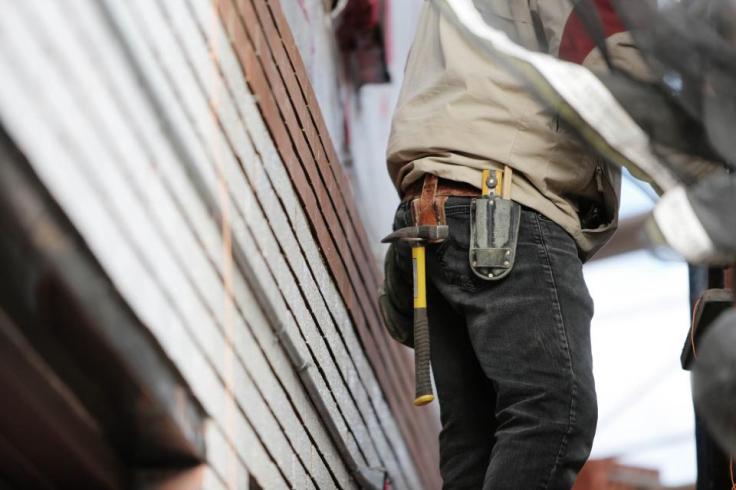 Residential Construction has very specific challenges tied directly to a homeowner’s opinion and satisfaction; while lien laws can serve as protection for contractors, they do not speed up the rate of payment if there are conflicts. Most subcontractors that do good work will get paid either weekly or bi-monthly to keep cash flow moving, and while this is a much better rate than the average commercial contractor, money is held from one project to entice contractors to the next project. There is very little regulation protecting subcontractors from general contractors. Payment can also be tied to customer satisfaction; if a homeowner doesn’t like the work, no matter how good or complete it is, the payment is often held for long periods of time. In many ways, residential constitution is like the wild west of construction. It is very hard to get predictable and fast paying customers because of how volatile the housing market is. One wrong move and a Home Builder can get stuck with unmovable inventory and no money to pay subcontractors. If a good relationship is formed between the contractor and the subcontractor, residential construction has the potential to pay much faster than commercial projects, however the rates for work are often lower.
 Commercial Contractors have a whole different set of problems to deal with. Most of my experience is with commercial construction (not all), so I have a more comprehensive description of the problems that plague commercial contractors, especially subcontractors. To understand the billing and payment challenge I need to go through the billing – payment process for most contracts. When a job is complete, a subcontractor is required to bill a project on a specific date (usually on the 15th, 20th, or 25th). A contractor can bill through the end of the month (projected) but if the estimate is not accurate, the entire pay application can be denied and the billing can be pushed to the next month. Once a pay application is received (and let’s assume that all the “i’s” are dotted and the “t’s” are crossed), then the General Contractor turns in their pay applications to the owner. When the owner pays, and that is usually 60 days, the General Contractor has 10 days to pay the subcontractor. If you do the math on this time table, most subcontractors can expect to get paid anywhere from 45-90 days from the beginning of their work on a project. Retainage is the money that is held until the job is 100% complete by all contractors involved; this is money that can take up to a year to collect on most jobs and it is usually between 5% and 10% of the total contract. In many cases, the retainage makes up a subcontractor’s profit.
 Resin Adviser